
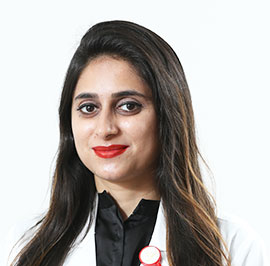
Gulshan Shahzadi
Sheikh Khalifa General hospital Umm Al Quwain, UAE
Abstract Title: : Instrument Assisted Soft Tissue Mobilization
Biography:
Research Interest: IASTM, Graston Technique Instrument assisted soft tissue mobilization (IASTM) is a skilled myofascial intervention used for soft-tissue treatment. It is applied using instruments that are usually made of stainless steel with edges and contours that can conform to different body anatomical locations and allows for deeper penetration. It is used for the detection and treatment of soft tissue disorders. The technique itself is said to have evolved from Gua sha which is a method used in Chinese medicine. How does it work? Instruments effectively break down facial restrictions and scar tissue. The ergonomic design of these instruments provides the clinician with the ability to locate restrictions and allows the clinician to treat the affected area with the appropriate amount of pressure. The introduction of controlled microtrauma to affected soft tissue structure causes the stimulation of local inflammatory response. Clinical Benefits Studies have also showed clinical benefits of IASTM showing improvements in range of motion, strength and pain perception following treatment. Benefits to the Therapist IASTM provide clinicians with a mechanical advantage, thus preventing over-use to the hands, it provides deeper tissue penetration with less compressive forces to the interphalangeal joints of the clinician’s hand. Also, it increases the vibratory perception of the physical therapist’s hand holding the instrument to altered soft tissue properties such as tissues restrictions or adhesions. So, the therapist can detect soft tissue irregularities easier. Types of Tools Graston instruments There are many companies for IASTM such as RockTape®, HawkGrips®, Graston®, Técnica Gavilán®, Functional and Kinetic Treatment with Rehab (FAKTR)®, Adhesion Breakers®, augmented soft-tissue mobilization or ASTYM®, and Fascial Abrasion Technique™. Each company has its own treatment approach with different instruments designs. IASTM can be made from varying materials including stainless steel, titanium, plastic, buffalo horn, stone, quartz, and jade. The most common IASTM instruments used are stainless steel. Practical Application IASTM can’t be done by itself, it must be combined with motion and strengthening program to enhance the tissues remodeling. When IASTM is applied to goes through 6 steps 1. Examination 2. Warm-up is done for 10-15 mins by light jogging, elliptical machine, stationary bike or an upper body ergometer 3. IASTM, done at 30-60 degrees angle for 40-120 seconds 4. Stretching, 3 reps for 30 seconds 5. Strengthening, high repetitions with low load exercise 6. Cryotherapy, 10-20 min Biography Gulshan Shahzadi is born and bought up in UAE. Has completed her Bachelor of physiotherapy in 2015 and Master of Physical Therapy in 2020 from Gulf Medical University Ajman. She is topper with GPA score 4 and has high academic and research enthusiasm. Her keen interest in Cardiac Rehabilitation made her perform clinical trials and publish research in Physiotherapy Research International Journal on 06/07/2021 ( https://doi.org/10.1002/pri.1919 ) with high clinical impact under the title Power walking based outpatient cardiac rehabilitation in patients with post-coronary angioplasty. She has been nominated as Speaker for various conferences earlier. Currently she is working at Sheikh Khalifa General Hospital, UAQ. Recently she has learned dynamic release therapy Facia to function by Gary lag from USA. Dynamic Release is made from solid, non-porous stainless steel to prevent the transfer of pathogens.Each instrument features angled-grooved grips to ease and ensure maximum comfort for the practitioner’s hands during treatment. It requires less pressure to detect and alters collagenous scar tissue, virtually eliminating bruising of the patient and further speeding the return to activity. Today’s presentation is based on how to use dynamic release therapy to release collagen bands on patients and athletes.