

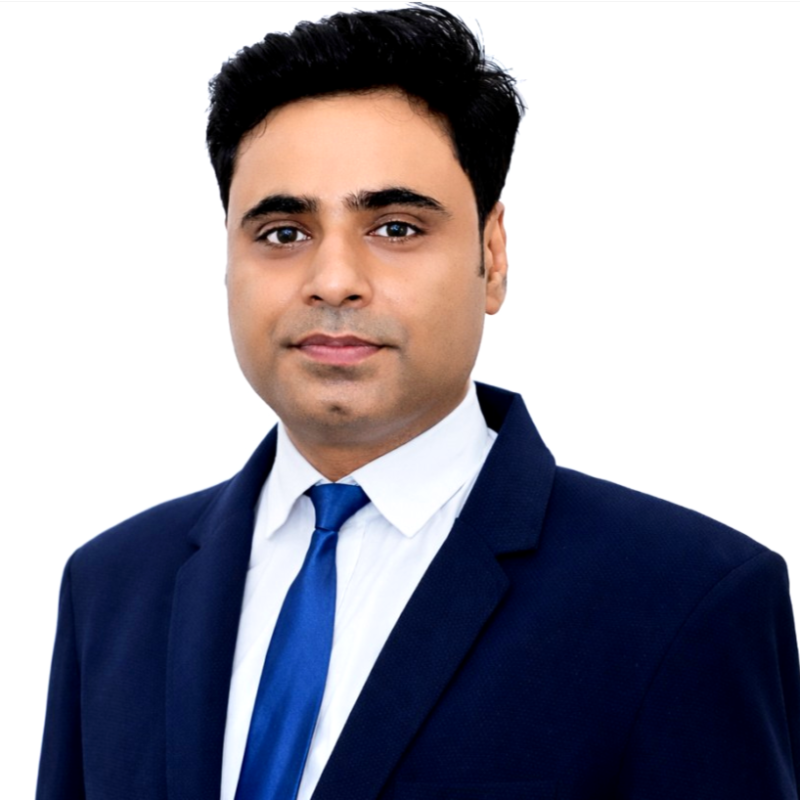
Sougata Panda
Chandigarh University, Punjab, India
Abstract Title: Effectiveness Of a Four-Week Osteoporosis E-Educational Program on Knowledge, Health Belief, and Perceived Barriers to Exercise in Indian Office Workers
Biography: Dr Sougata Panda, PhD. With over a decade of academic, research, and clinical experience, holds 11 patents, multiple copyrights, and is the founder of a registered startup. His research includes collaborations with PGIMER Chandigarh, Hochschule Fresenius University (Germany), and other international institutions. He completed a global project funded by NIHR (UK), NIH (USA), and Cochrane, and received an official acknowledgement for his significant contribution to Indo-German research. His work has been featured in the New York Times (USA), Ajit (Punjab), Amar Ujala, and Himachal newspapers. Dr Panda has been selected as a judge for the QS Reimagine Education Awards, London. He has been an abstract reviewer for the World Physiotherapy Congress (2021–2024) and an invited speaker at multiple national and international forums. He has attended more than 60 workshops and conferences, and has received the Best Researcher Award and the International Star Award for Best Patent in Health Care.
Research Interest: Sedentary lifestyles have a detrimental impact on health, increasing the risk of conditions such as osteoporosis, a disease of the skeleton characterised by low bone strength leading to increased risk of fragility fractures. Even among educated individuals, there is a?prominent gap in knowledge regarding osteoporosis awareness, risk factors and treatment. Closing this gap requires a multi-pronged strategy that provides vital?knowledge while also addressing the barriers to healthy behaviours. To do so, a questionnaire for perceived barriers to exercise in office workers and an osteoporosis e-educational booklet were developed and validated, and?the effect of the e-educational booklet on the change in osteoporosis knowledge, health beliefs and perceived barriers to exercise in office workers was evaluated. The research consisted of three?phases. In phase I, the perceived barriers to exercise questionnaire was developed, validated and tested for reliability. Phase?II targeted the preparation and evaluation of the osteoporosis e-educational booklet. In Phase III, the e-booklet was assessed through a study conducted with participants who completed the Revised Osteoporosis?Knowledge Test, Osteoporosis Health Belief Scale, and perceived barriers to exercise questionnaire for Indian Office Workers. The?program was assessed through data analysis. The questionnaire for perceived barriers to exercise proved as valid?and reliable; the e-educational booklet was also validated. The osteoporosis e-educational program led to a?significant increase in the osteoporosis knowledge of participants, health beliefs were positively impacted, and perceived exercise barriers were effectively addressed. Participants reported diminished obstacles (personal, professional, social, and?informational) contributing to more motivation for regular physical activity. This study concluded that the four-week e-educational program for osteoporosis is effective in improving knowledge of osteoporosis, better health beliefs for osteoporosis and exercise, and lowering perceived barriers to physical activity?in Indian office workers.